
Major Presentations
88th International Meeting of the CBA
Menu
- Click on the buttons below to go to the day's major presentations.
- Click on the grey boxed number to go back to the day's schedule.
SAT SUN MON TUE  EVENT DETAILS
 SCHEDULE
 Saturday, July 18
7:15 |
PM |
– |
8:30 PM |
General Session |
|

Panel Discussion: “Texts, Tools, and Trust: Biblical Scholarship in the Age of Artificial Intelligence”
Generative AI is raising new questions for biblical scholars about writing, interpretation, authorship, academic integrity, and the formation of careful readers. This conversational panel will explore the challenges and possibilities AI presents for teaching and research, with attention to both disciplinary practices and broader questions of education, ethics, and formation. Rather than assuming that AI should simply be rejected or embraced, the panel will ask what biblical scholars need to discern carefully in this new technological moment.
Moderator: Ahida Calderón Pilarski, Saint Anselm College
Panelists: Joshua Scott, Marie Heath, and Brian HIllman
 Dr. Joshua Scott (he/him) is Director of Events and Technology for the Catholic Biblical Association of America and teaches biblical studies and religion at Augsburg University. He earned his PhD in Middle East Studies from the University of Michigan, with research focused on Second Temple Judaism, messianism, apocalyptic literature, and the social-political dynamics of biblical interpretation. His work sits at the intersection of biblical scholarship, teaching, digital infrastructure, and public-facing education, with current attention to how AI may reshape the interpretation and teaching of biblical texts.
 Dr. Marie K. Heath (she/her) works as Department Chair for Education Specialties and as an Associate Professor of Learning Design and Technology at Loyola University Maryland. Her internationally recognized scholarship interrogates schools and technologies as current sites of encoded oppression, and labors to advance more just technological and educational futures. She is co-editor of the CITE Social Studies Journal, co-founder of the Civics of Technology project, and a faculty fellow at the Center for Research and Evaluation at Loyola University Maryland.
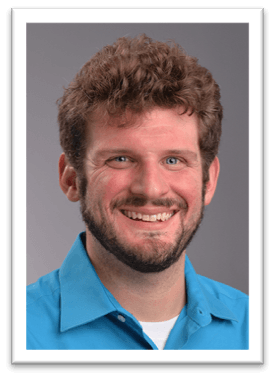 Dr. Brian Hillman (he/him) is an assistant professor in the Department of Philosophy and Religious Studies at Towson University in Towson, MD. His research focuses on Jewish thought, Kabbalah, Jewish literature, and religion and popular culture. In addition to serving as the managing editor of the Journal of Jewish Thought and Philosophy, his work has appeared in the Journal of Jewish Identities, Jewish Studies Quarterly, and Women in Judaism, among other venues.
|
|
 MENU
MENU
Sunday, July 19
11:00 |
AM |
– |
12:00 PM |
|
Simultaneous Sessions |
|
|
Old Testament:
|
D: Black Box Theater |
Borderlands studies have flourished in many disciplines including Biblical research ever since Gloria Anzaldúa’s seminal work “Borderlands / La Frontera: The New Mestiza” (1987). In Pentateuch studies, however, its empowering merits as well as its explanatory potential are still waiting to get explored. Especially for the book of Numbers, Borderlands theory allows for a deeper and critical understanding of the narrative and redaction critical peculiarities in ch. 21–36. The paper will present an introduction into Num 25 as a Borderlands text in the context of Num 21–36. The first part of the paper will map “Borderlands” as the narrative setting in Num 21-36 from the perspective of Borderlands theory. The second part of the paper focus on the narrative and linguistic Borderlands features in Num 25. It will argue that this perspective helps not only better understanding the challenging narrative structure and the precarious theological claims in this chapter, but also enables us to critically deal with them as readers.
 Presenter: Kirsten M. Schäfers
Kirsten M. Schäfers, Dr. Theol. 2021 Ruhr-University of Bochum, Germany, serves as an acting professor for Old Testament Studies at the Faculty of Catholic Theology, University of Bonn. In her research, she specializes in Pentateuch Studies, Textual Criticism, Hosea, and Dependency Studies. She is the author of “Textentstehung und Texttradition im Numeribuch” (THBS 9, Leiden: Brill, 2025) and co-editor of “Vom Text zum Entstehungsmodell in der Pentateuchkritik” (FAT 186, Tübingen: Mohr Siebeck, 2025).
New Testament:
|
A: McGuire East
|
Why was 1 John written? For decades, scholars have attempted to find answers in the few verses of the epistle that seem to speak to an external conflict, one involving the mysterious “antichrists.” In this presentation, however, Méndez argues that this approach has caused scholars to miss the essential message of the epistle of 1 John, the message that structures its opening and closing verses and that is reinforced repeatedly in the epistle. That message is that a person who is “born of God” and enjoys the divine indwelling “does not sin” and “cannot sin”— that is, that the new birth transforms a person's nature into one that is sinless and impeccable. As he develops this new reading of 1 John, Méndez situates the author’s argument within Jewish and Pauline backgrounds and revisits several confusing and misunderstood passages of the epistle.
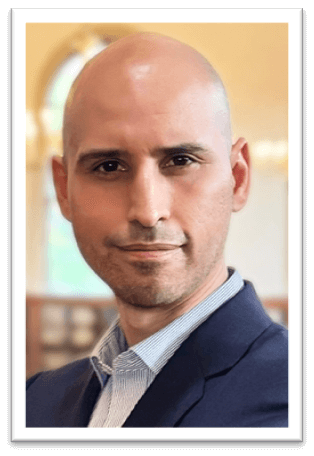 Presenter: Hugo Méndez
Hugo Méndez is an Associate Professor of Religious Studies at the University of North Carolina at Chapel Hill, where he specializes in the New Testament and its early reception. His recent books include The Gospel of John: A New History (Oxford, 2025) and The Epistles of John: Origins, Authorship, Purpose (Cambridge, 2026).
|
|
Sunday, July 19
8:00 |
PM |
– |
8:45 PM |
|
Presidential Address |
A: McGuire East
|
"Covenants in Perspective:
The Second Temple Period and Beyond"
The study covenants in the Hebrew Bible today provides a broad vantage on the Second Temple period. The biblical materials and other works from the Second Temple period exhibit considerable literary and theological diversity, manifesting a breadth that spans genres and social groups. In a departure from an earlier generation of scholars, this address considers five facets of covenant that scribes set in high relief as they engaged and extended covenantal traditions.
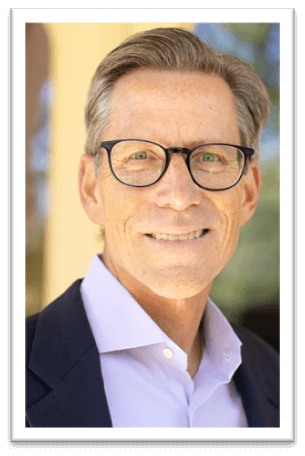 Richard J. Bautch, St. Edward's University
Dr. Richard Bautch is a scholar of biblical literature associated with the Perian period; in addition to eight authored and edited books, Dr. Bautch has written over 40 juried articles and essays while giving over 70 scholarly presentations. His research foci are several: the concept of covenant, the formation of the Pentateuch, and the postexilic portion of the book of Isaiah, to name but a few. He has an enduring interest in the books of Chronicles, Ezra, and Nehemiah and is currently writing the Anchor Bible commentary on 2 Chronicles.
Dr. Bautch is also a beloved professor at St. Edward’s University in Austin, Texas, where he earned the university’s Distinguished Teaching Award in 2023. His dedication extends beyond the classroom, and he especially enjoys mentoring advanced students in biblical research. Reflecting the esteem of his peers, Dr. Bautch has also held several administrative posts in the past including the chair of the Department of Religious and Theological Studies and Associate Dean. Currently at St. Edward’s, he leads the Holy Cross Institute, where he has the opportunity to bring together work on mission and scholarship.
Dr. Bautch received a Ph.D. in Judaism and Christianity in Antiquity from the University of Notre Dame, the institution that played a formative role in his approach to the biblical texts and history. His doctorate is in Christianity and Judaism in Antiquity; in addition to his major concentration in Hebrew Bible/Judaica, he completed concentrations in liturgical studies and New Testament.
Within the Catholic Biblical Association, Dr. Bautch has been a leader and contributor. He has served on the CBA Executive Board at different times as a consultor, vice president, and now as our president. Beyond his executive leadership, he has shaped the association's scholarly output through his editorial work, serving two terms on the Catholic Biblical Quarterly editorial board and, since 2018, as the General Editor of both the CBQ Monograph Series and the CBQ Imprints series, which began in 2020. He was instrumental in creating CBQ Imprints, a series specifically designed to bring long-standing exegetical methods (literary critical as well as historical critical) into conversation with hermeneutical, interdisciplinary and reception-history approaches.
|
|
Monday, July 20
11:00 |
AM |
– |
12:00 PM |
|
Simultaneous Sessions |
Old Testament:
|
|
The nature of prophetic speech has typically been described in terms of the prophets' role as a divine messenger. Prophets are spokespersons for God; their word is a message from God and is understood to be primarily pedagogical. While there is much to commend this account, it does not fully account for how the biblical texts construe the words of the prophets as powerful in their own right. This paper will examine texts from the prophetic corpus that depict prophets not merely in the role of spokespeople, but as speakers of power words that bring about the realities of which they speak.
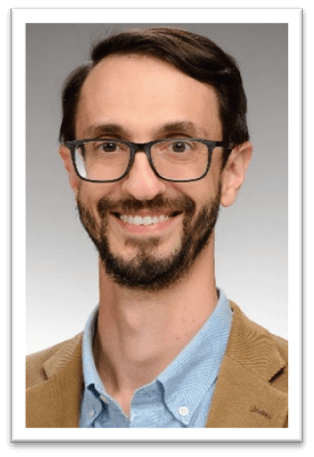 Presenter: Nathan Mastnjak
Nathan Mastnjak joined the faculty at the University of Notre Dame in 2025 as Assistant Professor of Hebrew Bible/Old Testament. His research and writing focus on the prophetic literature of the Old Testament. His most recent book, Before the Scrolls: A Material Approach to Israel’s Prophetic Library (OUP, 2023) explores the materiality of prophetic literature and argues that the earliest forms of prophetic literature should be understood on the model of a collection or archive rather than a book.
New Testament:“Sons, Slaves, Free(d)men, and Friends: 'The Works of Abraham'(John 8:39) in John’s Jewish Context” |
A: McGuire East |
Jesus’ puzzling dialogue with the Jews in John 8 ranges over subjects from sonship to slavery and is deeply enmeshed in a wide range of ancient Jewish discourses and discussions: haggadic, mishnaic, apocalyptic, allegorical, physiognomic/divinatory, and, of course, scriptural. At the same time, the influence of wider Greco-Roman traditions, notably jurisprudential and moral, is also importantly present. This paper explores the web of these topical connections to expose John’s unique notion of the “works of Abraham” (John 8:39).
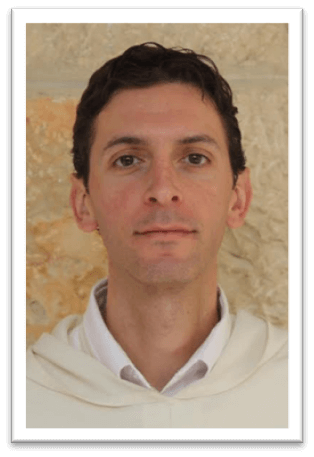 Presenter: Anthony Giambrone, O.P.
Anthony Giambrone, O.P., is Vice Director and Ordinary Professor of New Testament at the École biblique et archéologique française de Jérusalem, as well as Honorarprofessor für Topographie und materiale Kultur der biblischen Welt at the Ludwig-Maximilians-Universität in Munich. His most recent book is The Science of Scripture: Aquinas as Exegete and the Reordering of Theology (Emmaus Academic, 2026).
|
|
 Monday, July 20
8:00 |
PM |
– |
9:00 PM |
|
General Session |
A: McGuire East |
 “Honoring a Beloved Disciple”
Please join us for a special plenary session organized by friends of the CBA in honor of a distinguished scholar--a beloved disciple whose work has so enriched biblical studies and inter-religious relations. Shhh, it's a surprise! Following the plenary, there will be a festive celebration and champagne toast during the evening reception.
|
|
 Tuesday, July 21
11:00 |
AM |
– |
12:00 PM |
|
General Session |
A: McGuire East
|
“Paul, Judaism, and 1 Thessalonians”
Regarding Paul’s relationship to Judaism, a new approach to Paul is emerging. Several recent interpreters continue to affirm Paul’s Jewishness, but question how representative he should be for constructing broader ancient Jewish thought and how harmful his ideas were for ancient and modern Jews. This paper will offer a brief survey of Pauline scholarship with a special emphasis on readings of Paul that complicate the “Paul within Judaism” approach by highlighting aspects of his thought that are “ethnonationalist” (Emanuel 2025) or even “supersessionist” (Schwartz 2026). I will then reconsider one of the most difficult passages from Paul’s letters: his statement in 1 Thess 2:14–15 that there were Jews (or Judeans) who killed Jesus and the prophets, who displease God and oppose everyone. The paper will conclude with some ethical reflection on this text from my own location as a Protestant New Testament scholar, in conversation with Nostre Aetate.
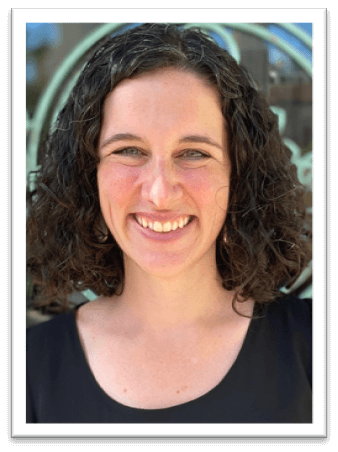 Presenter: Olivia Stewart Lester
Dr. Olivia Stewart Lester is an Associate Professor of New Testament and Early Christianity and Graduate Program Director at Loyola University Chicago. She is the author of Prophetic Rivalry, Gender, and Economics: A Study in Revelation and Sibylline Oracles 4–5 (Mohr Siebeck, 2018), and an editor of “Listen to the Sibyl”: The History, Poetics, and Reception of the Sibylline Oracles (Brill, 2026).
|
|