
Featured Voice: Woo Min Lee

-
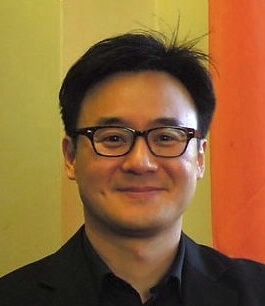
Woo Min Lee - Tell us a little about yourself and your professional interests.
I am an ordained elder in the United Methodist Church and serve as adjunct faculty in religious studies, with a particular focus on biblical studies. I earned my doctoral degree in Hebrew Bible from Drew Theological Seminary. Currently, I teach religious studies and biblical studies as adjunct faculty at College of DuPage and McCormick Theological Seminary. Alongside my teaching, I serve as Lead Pastor of Hyde Park Korean United Methodist Church and as director of United Methodist Campus Ministry at the University of Chicago. My professional interests lie primarily in the Hebrew Bible, biblical interpretation, and the ways in which biblical texts engage questions of history, memory, conflict, and trauma. I am especially interested in bringing together biblical scholarship, historical inquiry, and contemporary perspectives in my teaching and research.
- What project, publication, course, or question is most animating your work right now?
My current research continues to explore the military conflict between Sennacherib and Hezekiah from the perspectives of postcolonial interpretation, cultural memory, and trauma. My doctoral dissertation was recently published as a monograph, The Language of Power in the Simile “Like a Caged Bird”: A Critical Discourse Analysis of the Assyrian Royal Lion Hunt and Sennacherib’s Military Campaign Against Hezekiah of Judah (Pickwick Publications, 2025). ([https://wipfandstock.com/9798385235285/the-language-of-power-in-the-simile-like-a-caged-bird/]) The book examines Sennacherib’s 701 BCE campaign against Judah by bringing together Assyrian royal hunting imagery, military rhetoric, and biblical traditions.
Building on this work, I would like to pursue a fresh interpretation of ancient warfare by examining how military conflicts are remembered, represented, and reinterpreted by communities on different sides of an imperial encounter. I am particularly interested in how cultural memory and trauma shape the ways communities make meaning of violence and survival.
- What has your involvement in the CBA meant for your scholarship, teaching, or professional community?
My involvement in the CBA has given me a valuable collegial network through which I have connected with scholars and colleagues from around the world. CBA meetings have provided a welcoming and supportive environment where I have had opportunities to meet scholars with diverse areas of expertise and to discuss ideas about biblical scholarship. These conversations have encouraged me to continue and deepen my research interests. At one point, I was wondering how I might publish my doctoral dissertation as a book. Conversations with colleagues I met through the CBA Annual General Meeting gave me valuable insights and encouragement about the publication process. Those interactions ultimately helped me move forward with publishing my dissertation as a monograph. The CBA has therefore been important not only for my scholarship but also for building meaningful professional relationships.
- What is one passion, interest, or practice outside your professional work that you would like others to know about?
Outside my professional work in academia and ministry, I enjoy sports, particularly running, tennis, and golf. Each of these activities gives me a different way to step away from the demands of teaching, research, and ministry. Running gives me time for reflection and solitude, while tennis and golf provide opportunities for recreation, challenge, and connection with others. I appreciate the different kinds of discipline and enjoyment that these activities bring to my life. They provide a healthy balance to my professional responsibilities and remind me that an enriched life involves more than work alone. These interests have become meaningful practices that help me maintain balance, refresh my mind, and return to my academic and ministry work with renewed energy.