
2027 Summer School in Trier: Understanding the Bible from the Liturgy
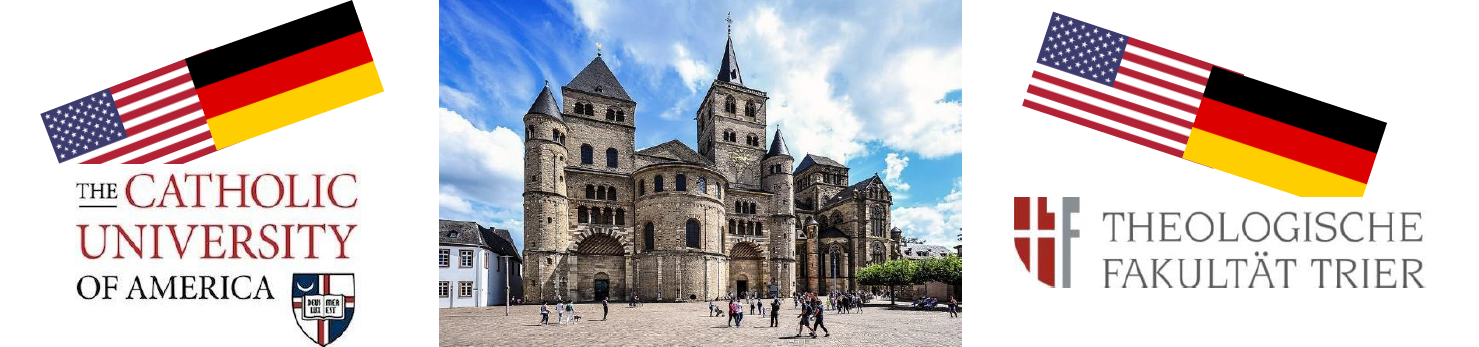
 Download Flyer
 Understanding the Bible from the Liturgy
May 11- June 17, 2027 | Trier Germany
Opportunity for graduate students
● 3-credit course "Understanding the Bible from the Liturgy" in Trier (in English; see the course description below)
● Visit to the Archive and Library of the German Liturgical Institute: A glimpse behind the liturgical reform after Vatican II (in reference to the course).
● Use research opportunities at the theological libraries in Trier, esp. at the Library of the German Liturgical Institute. It is one of the best international libraries for liturgical
studies in the world (including sacred art and music; in various languages; 90,000 titles
and 230 journals).
● Discover various liturgical manuscripts from Trier (there will be a practical introduction
to working with them).
● Meet German students.
● In addition, attend optional classes on the Liturgy of the Hours (“Praying the Bible”) and
Old Testament and New Testament classes in German
● Trier is a World Heritage Site with Roman architecture (the emperor Constantine lived in
Trier; early Christian excavations), medieval city center, wonderful churches, and modern
atmosphere (Click here for a video about Trier).
● Enjoy study trips to Cologne, Maria Laach (center of the Liturgical Movement in
Germany), Mainz (Gutenberg Bible), and get in touch with German culture and language
Cost: $2,490
● Program fee includes tuition, housing (single room with private bathroom) in the
seminary in the city center next to the Liturgical Institute. Included also are the study
trips, wine tasting, daily breakfast, six days with full board, bus to Maria Laach.
● Other meals can easily be found in the city or at the university (with a student discount).
● Travel expenses incurred for the excursions and public transportation cannot be covered,
since tickets must be obtained individually. The “Germany-ticket” provides regional and
local public transport for ca. €69 (approx. $80) per month. You receive assistance to book
the ticket (see more: https://www.bahn.com/en/offers/regional/deutschlandticket).
● If you have difficulties to afford the costs of the program and can prove it, you might
email Prof. Benini to explore some financial support.
Course description: “Understanding the Bible from the Liturgy” (3 credits)
Professors: Dr. Marco Benini (liturgy, Trier; taught 7 semesters at CUA), with some classes by Dr. Stefanos Alexopoulos (liturgy, CUA), Dr. Michael Witczak (liturgy, CUA), Dr. Hans-Georg Gradl (NT, Trier), and Dr. Carolin Neuber (OT, Trier), Dr. Jean Ehret (systematics, Trier), Rabbi Dr. Jehoschua Ahrens (Jewish liturgy, Trier).
“Sacred Scripture is of the greatest importance in the celebration of the liturgy.” (SC 24). The Bible shapes the liturgy like no other book: OT and NT readings are intertextually combined. Psalms are often specifically chosen. Prayers and hymns are biblically permeated. Liturgical actions and symbols (e.g., the washing of feet on Holy Thursday, baptismal rites, etc.) are inspired by sacred Scripture. At the same time, the liturgy interprets sacred Scripture and makes the Bible, a written echo of the revelation, to the living Word of God, whom we encounter in the liturgy. The reception
of Scripture (e.g., according to the literary reception theory) is part of the active participation in the liturgy.
The course explores the rich relationships between Bible and liturgy. The first part examines liturgical elements within the OT and NT. The second part discusses the various ways in which liturgy uses Scripture (cf. SC 24). The course finally pays attention to systematic-theological dimensions of the liturgical hermeneutics of Scripture. The whole course promotes an interdisciplinary dialogue of liturgical and biblical studies and considers pastoral implications in
the current challenges and opportunities for the Church. Assigned readings for each class are in English (additional ones in German and other languages are optional).
In the place of the final exam students will submit a research paper on a topic related to the
course. An official transcript in German and English will be provided. That will facilitate the
transfer of credits
How to apply:
● Please send your application (CV, letter of intent, recommendation letter from your professor) to benini@uni-trier.de by October 30, 2026.
● The application will be reviewed by the professors Stefanos Alexopoulos (CUA), HansGeorg Gradl (Trier), and Marco Benini (Trier). We will reply to all applicants by November 15, 2026 and invite the chosen students to a Zoom-meeting (TBA) to provide further information on practical steps.
For any questions please contact: benini@uni-trier.de